 JUXIN FOOD EQUIP


Что вызывает чрезмерно быстрый износ ножей костного дробилка?
4Bone crusher blades wear fast mainly due to hard impurities, improper feeding, wrong blade-liner gaps or vibration, poor maintenance, and low-hardness blades.
View detailsПоиск по всей станции
The frozen meat slicer cuts frozen meat blocks into even slices with sharp cutter assemblies. It is widely used in prefabricated food and meat product processing. Standard daily maintenance ensures slicing precision, reduces blade wear, minimizes breakdowns and extends machine service life while guaranteeing food safety. Maintenance can be divided into post-production maintenance, periodic maintenance and long-term shutdown maintenance.
Cleaning after every production run is fundamental. Power off the machine after it stops completely. Dismantle removable parts including cutter assembly, pressing plate, feeding baffle and receiving tray. Wash them with warm water and food-grade detergent to thoroughly remove meat scraps, grease and residue without dead corners. Dry all components after cleaning, especially blades and conveyor chains, to prevent rusting. Wipe the outer casing with a damp cloth. Never flush the electric control box or motor directly with water to avoid short circuit. Inspect blades for nicks or chipping before reassembly.
Daily inspection. Check blade fixing screws before startup to prevent loosening. Verify blade gaps and ensure the thickness adjustment mechanism moves smoothly without jamming. Inspect tension of conveyor and pressing belts. Loose belts slip while over-tight belts accelerate wear. Confirm safety guards are in place and safety protection devices work effectively. Check whether sliding parts lack lubrication. Apply food-grade lubricant when necessary. Ordinary industrial lubricating oil is forbidden to avoid raw material contamination.
Weekly in-depth maintenance. Remove protective covers and clean accumulated grease and meat residue inside the machine. Apply food-grade grease on moving parts such as transmission chains, guide rails and bearings. Check blade wear. Sharpen dull blades promptly and replace cracked blades directly. Inspect sealing rings for aging or damage to prevent leakage. Test the thickness adjustment knob to ensure accurate scales and consistent slice thickness.
Monthly comprehensive inspection. Check motor operating current and inspect cables for damaged outer sheaths. Tighten bolts across the whole machine. Check transmission belts and replace cracked or aged belts in advance. Clean dust from cooling vents to avoid motor overheating. Calibrate the slicing thickness scale to eliminate errors.
Maintenance for long-term storage. Fully clean and dry all components. Coat blades with food-grade anti-rust oil. Store the machine in a dry and ventilated place and cover it with a dust cover. Avoid humid and corrosive environments. Before reuse, clean thoroughly to wipe off anti-rust oil and inspect all parts before startup.
Precautions: Cut off power before all maintenance work. Blades are sharp, so wear protective gloves during disassembly to prevent cuts. Do not use steel wool to scrub stainless steel surface, as scratches will trap dirt. Regular maintenance reduces faults such as material jamming and uneven slices, stabilizes slicing quality and meets hygiene audit standards of food workshops.

Bone crusher blades wear fast mainly due to hard impurities, improper feeding, wrong blade-liner gaps or vibration, poor maintenance, and low-hardness blades.
View details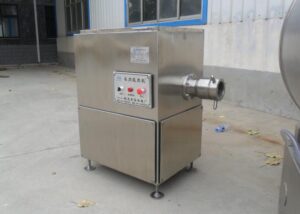
Frozen meat grinders face poor discharge, uneven particles, motor overload and leakage; timely fixes and maintenance cut downtime and ensure stable production.
View details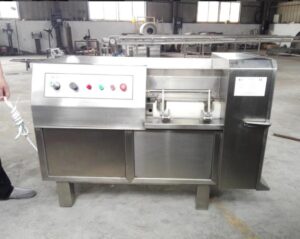
Uneven frozen meat cubes mainly stem from blade assembly, feeding, meat temperature/shape and mechanical faults; maintenance and proper settings solve them.
View details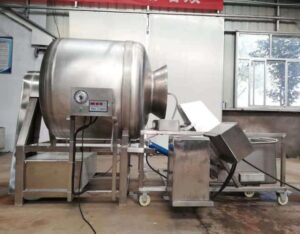
Poor vacuum tumbling causes uneven seasoning, low water retention, low yield and hard meat. Check 60–80% load, vacuum seals/pump, tumbling cycle and 0–4℃ meat.
View details

HelloPlease log in