 JUXIN FOOD EQUIP


Meat Mixer: Core Equipment for Filling Mixing in Meat Processing
9Meat mixers evenly blend meat paste, additives and seasonings for sausages, meatballs and fillings; vacuum models improve texture, yield and efficiency.
View detailsSearch the whole station
The bowl cutter is a key machine in the deep meat processing industry, widely used for the production of sausages, luncheon meat, surimi products, meatballs and more. With high-speed rotating cutting blades, it chops and emulsifies meat materials to produce fine and elastic meat batter. It directly determines the texture, elasticity and yield of meat products, making it indispensable for prefabricated food and sausage production lines.
A bowl cutter mainly consists of a cutting bowl, high-speed blade assembly, discharging device, transmission system and electric control system. High-end models are equipped with a vacuum system. During operation, pre-treated meat chunks, ice water, starch, salt, spices and other ingredients are loaded into the cutting bowl. The rapidly spinning blades chop the raw materials, break down muscle fibers and promote the precipitation of salt-soluble proteins in meat. Meanwhile, auxiliary materials are fully blended with meat batter to form a stable emulsified system. Vacuum bowl cutters work under negative pressure to extract air bubbles inside the meat batter, delivering finished products with fewer pores and smooth, fine cross-sections.
Traditional manual meat chopping is extremely inefficient, producing uneven meat particles and failing to achieve emulsification, which results in coarse product texture. Ordinary meat grinders only produce meat granules and cannot deliver the emulsifying effect of bowl cutters. The high-speed cutting action of bowl cutters fully releases proteins to lock in moisture and fat, greatly improving the water retention of meat batter. Products processed by bowl cutters are less likely to leak oil or crack after cooking, with a markedly higher yield and better elasticity and crispness.
The whole machine is built with food-grade 304 stainless steel, which is corrosion-resistant and easy to clean, meeting food hygiene standards. Operators can adjust blade speed, chopping duration and bowl rotation speed for flexible processing. Different parameters can be set for various products: partial meat granules are retained for meatballs, while extended chopping time is adopted for ham sausages and fish tofu to achieve full emulsification. Models range from small laboratory machines to large industrial units. Small machines suit R&D and sample making in cooked food factories, and large units can connect to assembly lines for continuous mass production.
Strict process control is required when operating a bowl cutter. A great amount of heat is generated during chopping, so ice water must be added to control material temperature. Excessive meat temperature will denature proteins, destroy emulsification and cause oil leakage and poor texture of finished products. The feeding volume must stay within the machine’s rated capacity. Overloading leads to insufficient chopping, while underloading accelerates blade wear. The cutting blades are extremely sharp; hands must never reach into the bowl during operation. After production, thoroughly clean the bowl and blades and remove residual meat batter to avoid bacterial growth. As wearing parts, blades need regular edge inspection, sharpening or replacement.
With the rapid growth of the prefabricated food industry, consumers have higher expectations for the texture of meat products. The bowl cutter standardizes meat emulsification and reduces quality differences caused by manual operation. It is often matched with frozen meat cutters, meat grinders, meat mixers and vacuum tumblers to form a complete meat processing production line. Stable emulsification improves product grade and reduces raw material loss, helping enterprises realize automated production and strengthen their competitive edge in the market.
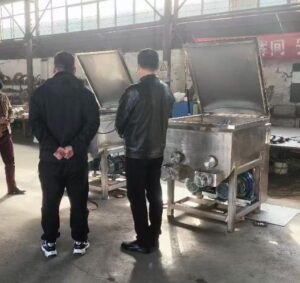
Meat mixers evenly blend meat paste, additives and seasonings for sausages, meatballs and fillings; vacuum models improve texture, yield and efficiency.
View details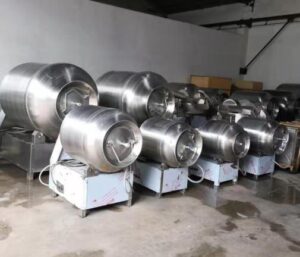
Vacuum tumbler price depends on capacity, 304 steel/workmanship, refrigeration/PLC features, pump brand, and after-sales. Choose by output and long-term cost.
View details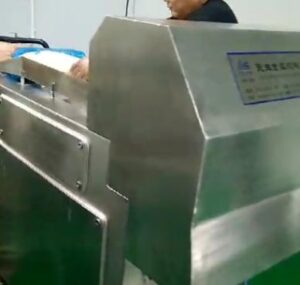
Frozen meat cutter directly cuts unthawed blocks at about -18℃, solving thawing loss, labor and safety issues in meat processing while improving yield and hy...
View details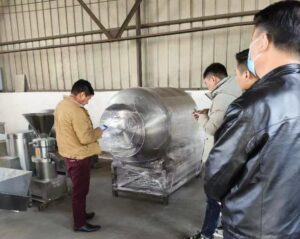
Vacuum tumblers use vacuum and reciprocating tumbling to speed meat marination, improve tenderness, water retention, shelf life, and standardized production.
View details

HelloPlease log in